
Non-Surgical Disc Care
Spinal Decompression in North Phoenix
Computer-guided traction on the Dynatron DX2 Advanced Decompression by Dynatronics gently unloads injured discs: a conservative path for herniated discs, sciatica, and chronic low back pain when you want to avoid injections and surgery.
How decompression helps a struggling disc
If persistent back pain or burning, radiating leg pain has made simple things (getting out of bed, standing in line, driving across town) frustrating and exhausting, you are not alone. Many Moon Valley and North Phoenix patients arrive after adjustments, physical therapy, medications, or injections have fallen short.
For many residents of Moon Valley, discomfort begins gradually, after long commutes, weekend yard work, or recreational activity in nearby North Mountain Village. What starts as stiffness can evolve into burning leg pain, numbness, or weakness. When disc pressure irritates a nerve root, the result is often classic sciatica.
Spinal decompression uses controlled cycles of distraction and relaxation to create mild negative pressure inside affected discs. That negative pressure can encourage bulging or herniated disc material to retract, reduce pressure on irritated nerves, improve disc hydration, and draw oxygen and nutrients into injured tissue. In appropriate cases, published research has reported substantial improvement, though, as with any care, results vary and are never guaranteed.
Is It Right for You?
Conditions that may improve with decompression
Decompression is considered when mechanical compression in the spine is preventing proper healing, including degenerative disc disease, facet syndrome, and spinal stenosis.
Herniated & Bulging Discs
Reducing internal disc pressure may allow protruding material to retract and nerves to calm.
Learn moreSciatica
Gentle lumbar distraction eases pressure on the nerve roots behind radiating leg pain, numbness, and tingling.
Learn moreChronic Low Back Pain
A conservative option when stiffness and pain persist despite rest, medication, or standard care.
Learn moreNeck & Disc-Related Arm Pain
Cervical decompression can relieve disc pressure contributing to neck pain and headaches.
Learn moreSciatica and lumbar radiculopathy
Sciatica occurs when the sciatic nerve becomes inflamed or compressed. Pain often begins in the lower back and radiates into the hip, buttock, and leg. Many patients describe the sensation as sharp, burning, or electric. Numbness, tingling, or weakness may also occur.
Spinal decompression works by reducing pressure on lumbar discs and nerve roots. By gently distracting the spine, the therapy helps relieve inflammation around the nerve. Read more about sciatica treatment.
Bulging discs vs. herniated discs
Spinal discs contain a soft inner material known as the nucleus pulposus. When pressure causes this material to push outward but remain contained, it is called a bulging disc. If the inner material protrudes through the outer layer, it is referred to as a herniated disc.
A simple analogy is a jelly-filled doughnut. Pressing lightly causes it to bulge. Pressing harder may cause the filling to protrude outward. That protrusion represents a herniation.
Both bulging and herniated discs can compress nearby nerves, leading to local back pain and radiating leg symptoms. The Dynatron DX2 Advanced Decompression by Dynatronics applies mild to moderate distraction forces that reduce internal disc pressure. As pressure decreases, disc material may retract, and nutrient exchange improves. This creates a more favorable healing environment. We often combine decompression with chiropractic care and targeted core strengthening to stabilize the spine and support long-term progress.
Spinal stenosis
Spinal stenosis refers to narrowing of the spinal canal or foramina (the openings where nerves exit the spine). Degenerative changes such as bone spurs or disc degeneration commonly contribute to this narrowing.
When the spinal canal and exiting nerve roots are compressed, patients may experience back or neck pain, leg or arm weakness, and discomfort that worsens with standing or walking.
Decompression helps by gently opening joint spaces and reducing mechanical compression. Flexion-biased positioning and gentle chiropractic adjustments may further improve comfort and mobility. Treatment for stenosis often ranges from ten to twenty sessions depending on severity.
Facet syndrome
Facet joints are small stabilizing joints located at the back of the spine. Although small (about the size of a fingernail), they are richly innervated and capable of producing significant pain when inflamed.
Facet irritation often causes localized back or neck pain that worsens with extension or rotation. Patients may notice stiffness when standing, twisting, or bending backward.
Spinal decompression reduces joint compression forces and encourages fluid exchange within the joint space. As distraction widens the facet joint slightly, lubricating fluids may circulate more effectively. Treatment plans typically include ten to fifteen decompression sessions combined with chiropractic adjustments and corrective exercises.
A conservative approach for lasting relief
Low back pain and sciatica can significantly impact daily life, whether you are navigating busy streets, staying active outdoors, or simply trying to sleep comfortably. Our approach emphasizes conservative care designed to reduce nerve pressure, improve disc health, and restore function without surgery.
If you are experiencing radiating leg pain, persistent back stiffness, or disc-related symptoms, a structured evaluation can determine whether spinal decompression is right for you. Taking action early may help prevent progression and support a healthier, more resilient spine.
What to expect during treatment
Every plan starts with a thorough evaluation (history, examination, and a review of any imaging you already have) to confirm decompression is appropriate for your condition. We do not guess; we measure. If decompression is right for you, we will tell you. If it is not, we will tell you that too.
If decompression is indicated, your care plan may include:
- Spinal decompression therapy
- Chiropractic adjustments
- Core stabilization exercises
- Targeted rehabilitation for spinal support structures
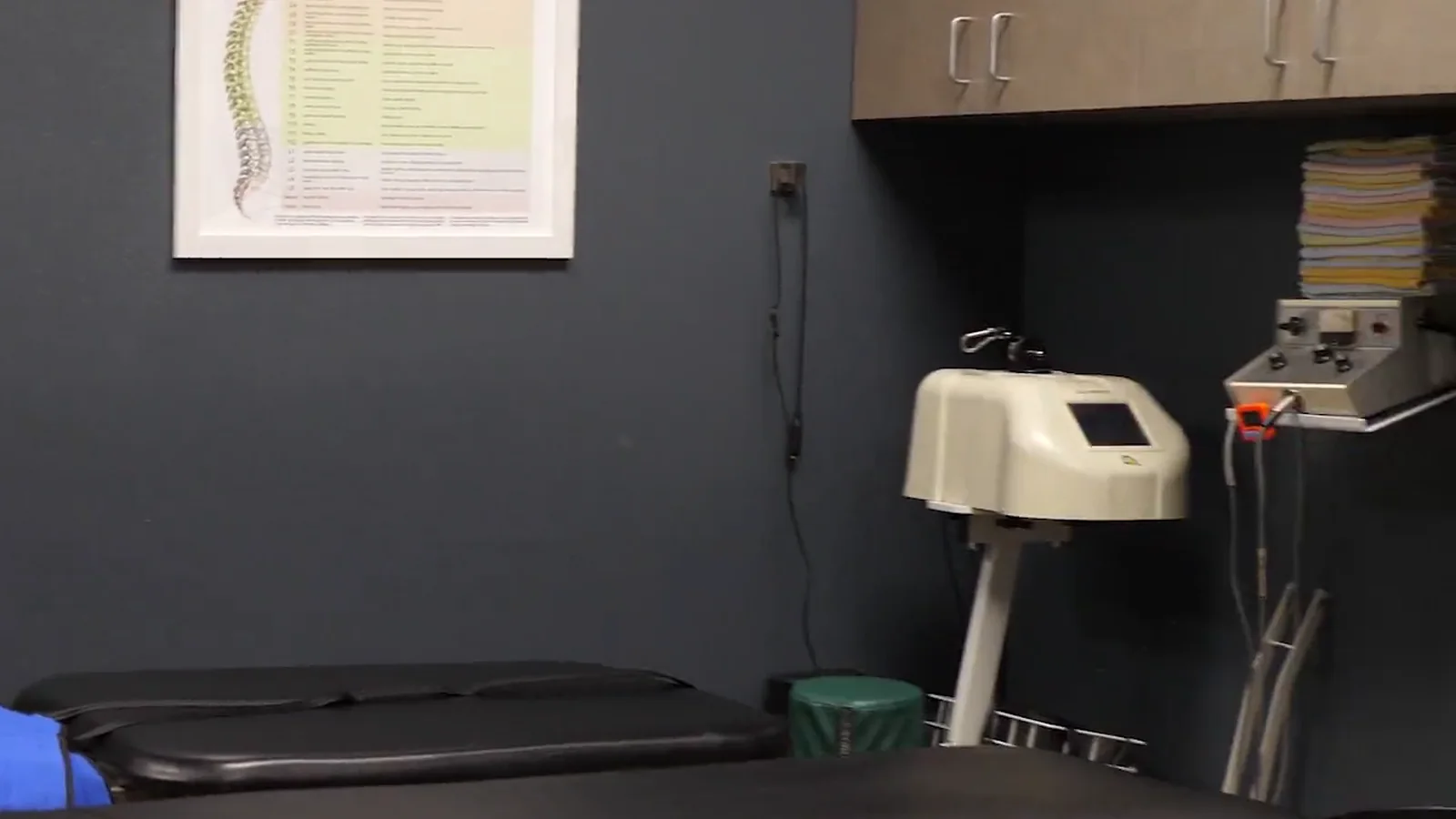
During a session you lie comfortably on the table while the Dynatron DX2 Advanced Decompression by Dynatronics applies gentle traction in brief, repeating intervals. Most patients describe it as calming; each table session lasts about 10 to 15 minutes. Care usually begins at two to three sessions per week, and a typical plan for disc-related pain runs 15 to 20 sessions, tapering as symptoms improve. Decompression is often paired with precise adjustments and core stabilization exercises to protect your progress.
Most complete care plans range from $2,000–$5,000, and you will receive exact pricing before care begins. Have questions first? Visit our FAQ, or begin with the $79 new patient evaluation to find out whether decompression fits your case.
Common Questions
Spinal decompression FAQs
What is non-surgical spinal decompression?
It is a computer-guided traction therapy performed on our Dynatron DX2 Advanced Decompression by Dynatronics. Controlled cycles of gentle stretching and relaxation create mild negative pressure inside spinal discs, which can encourage bulging material to retract, relieve nerve pressure, and improve the flow of nutrients into injured tissue.
Does spinal decompression hurt?
No. Most patients find it relaxing and describe only a mild, comfortable pulling sensation. Some notice light, workout-like soreness after early sessions as the body adapts. You remain in control throughout, and settings are tailored to your comfort at every visit.
How many decompression sessions will I need?
A typical plan for disc-related pain runs 15 to 20 sessions over several weeks, usually starting at two to three visits per week and tapering as symptoms improve. Milder cases may need fewer; your exact plan and pricing are laid out clearly before care begins.
Who is a good candidate for spinal decompression?
People with herniated or bulging discs, sciatica, degenerative disc disease, facet syndrome, stenosis, or chronic low back pain that has not responded to other conservative care. It is not appropriate during pregnancy or with certain conditions such as severe osteoporosis or spinal fusion, which is why every plan starts with a careful evaluation.
Can decompression help me avoid back surgery?
For many appropriate cases, decompression offers a meaningful conservative alternative before considering injections or surgery, and research has reported substantial improvement in disc-related symptoms. No ethical provider can guarantee results, but a structured evaluation will tell you honestly whether decompression is a good fit for your spine.
How much does spinal decompression cost in North Phoenix?
Most complete care plans range from $2,000 to $5,000 depending on the number of sessions and supporting therapies involved. You will receive exact pricing before care begins (no surprises), and many patients start with the $79 new patient evaluation to confirm decompression is right for them.
Is spinal decompression safe?
Yes, spinal decompression is safe for most patients when administered by licensed, trained professionals. Common side effects mimic post-exercise soreness, resolving after initial sessions as muscles adapt to spinal stretching. Contraindications like severe osteoporosis are screened via thorough evaluations.
How long is a spinal decompression session?
Each session typically lasts 10 to 15 minutes. You lie comfortably on the table while the system gently applies traction for brief intervals and then relaxes. Many patients describe the experience as calming and comfortable.
Is spinal decompression better than an inversion table?
Spinal decompression uses precise, supervised traction targeting specific discs, unlike uncontrolled gravity inversion, which carries blood pressure risks. Unlike general traction or home stretching devices, decompression at SpinalWorks is customized and monitored.
Can pregnant women have spinal decompression?
Pregnant women are typically not candidates for spinal decompression due to abdominal pressure risks. Screenings ensure safety, and we can talk with you about alternatives.
Can decompression help neck pain?
Yes. Cervical decompression stretches the neck vertebrae to relieve disc pressure and headaches. Cervical decompression is most effective when it is part of a coordinated care plan rather than a stand-alone procedure.
What should I do after a decompression session?
Avoid heavy lifting, use ice or heat, and follow the stretching protocols we advise. Hydration aids disc rehydration, and many patients resume activities gradually. After a full course, maintenance includes periodic sessions, core exercises, and posture education to help prevent recurrence.
Does insurance cover spinal decompression?
Coverage varies, and we assist with verification. Our team reviews your benefits and explains your options clearly.
Begin Your Path to Relief
Your first visit starts here
Full consultation, examination, X-rays if necessary, and your first adjustment: $79 for new patients. Serving Moon Valley and North Phoenix with care, integrity, and heart.